# Local SEO for Plumbers: How to Get More Calls from Google in 2026
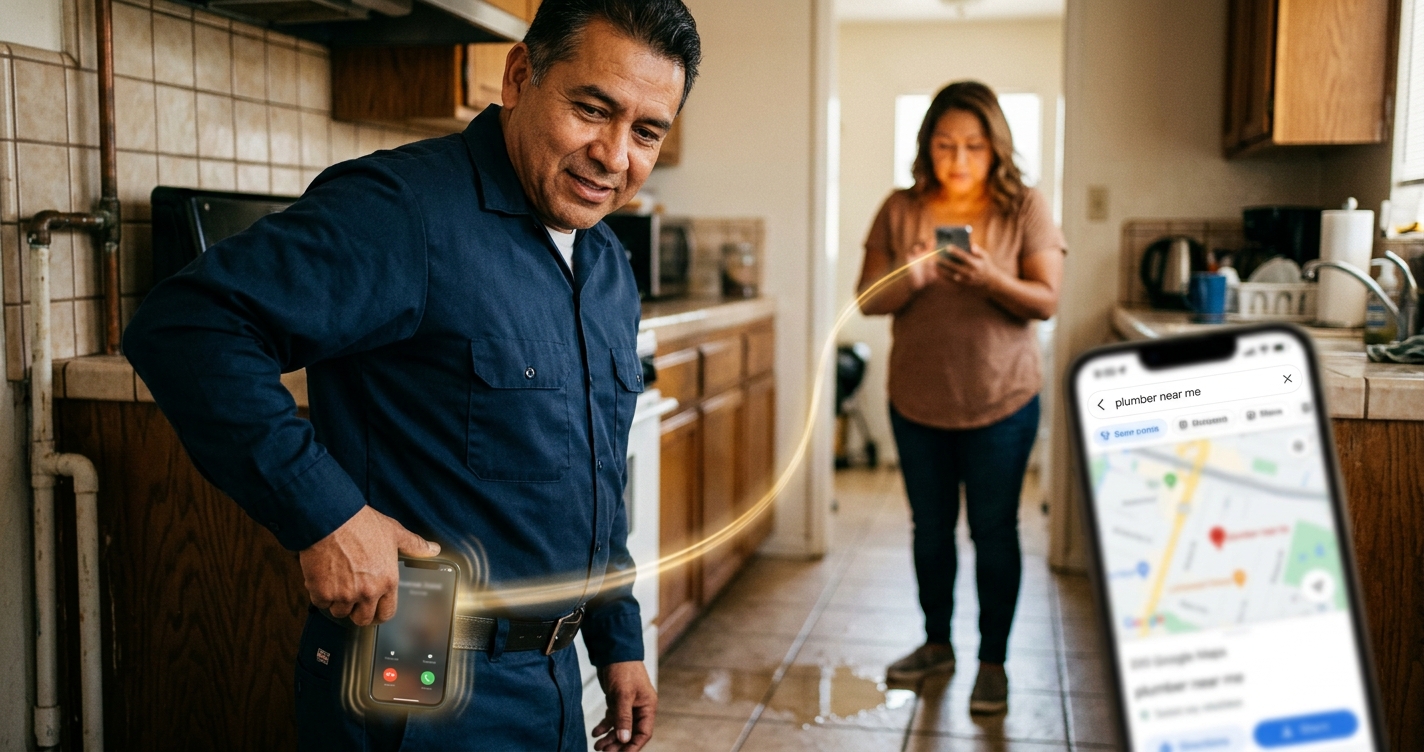
A burst pipe at 2 AM doesn't wait for business hours, and neither does your customer's search for an emergency plumber. When someone searches "plumber near me" or "24-hour plumber San Diego" in a panic, they call the first number they find. Your job is to make sure that's your business.
Local search is the lifeblood of plumbing services. Unlike national businesses, you're not competing with plumbers in Denver or Dallas—you're competing for the eight to twelve plumbers in your service area who also show up in Google's map results. Control that local search visibility, and your phone rings constantly. Neglect it, and you watch calls go to competitors while you're fully booked on jobs you found through word-of-mouth.
We've analyzed over 250 plumbing businesses across Southern California in our ClawSignal audits. The ones dominating local pack results—the top three plumbers showing on Google Maps—average 40-60% more job inquiries monthly than those ranked fourth through tenth. This guide shows you exactly how to become that top-ranked plumber in your area.
The Plumbing Service Search Landscape in 2026
Plumbers have a unique advantage in local search: urgency. Someone searching for a cosmetic dentist might take a week to book. Someone searching "emergency plumber" needs a response now. That urgency behavior signals to Google that you should rank highly when the search is made.
Google heavily weights recency for plumbing services. A business updated yesterday ranks higher than one updated six months ago. Why? Google assumes current information means an active, responsive business. Stale information suggests you might be closed or unreliable.
The second advantage: phone calls drive local SEO visibility. When someone calls your Google Business Profile number, clicks your "call" button, or uses your "request quote" feature, Google sees this as high-intent engagement. These engagement signals push your business higher in rankings.
Your competition is primarily local. A solo plumber with five trucks can outrank a regional company with 50 locations if that solo plumber optimizes local SEO properly. You have control here.
Step 1: Perfect Your Google Business Profile Setup
Your Google Business Profile is the search result. It's not secondary—it's primary. When someone searches "24-hour plumber," they see your business name, phone number, photo, reviews, and map pin. That's your storefront.
Start by claiming your business on Google Business (google.com/business) if you haven't already. Verify using the postcard method or phone call. Once verified, fill out every single field.
Add your primary service area. If you service San Diego, Chula Vista, and Oceanside, you can list multiple service areas (don't use your service radius in the address field—that's for your actual business location). This tells Google exactly where your plumbing truck can reach customers.
Upload recent, professional photos. Show your team, your trucks, your shop, and your work (with client permission). Photos with plumbing work results—before/after shots of fixed pipes, remodeled bathrooms, new installations—get 8x more views than generic team photos. Update photos every month. Google favors businesses that post frequently.
Add all your services as individual items: emergency repairs, drain cleaning, water heater installation, pipe replacement, new construction plumbing, fixture repair, sewer line service, water softener installation, and more. Each service is a potential match for customer searches.
Set your business hours accurately and update them for holidays. If you offer 24-hour emergency service, mark that. If your dispatch center opens at 6 AM but office hours start at 8 AM, reflect both. Incorrect hours frustrate customers and generate negative reviews, tanking your rankings.
Step 2: Build a Network of Citations
A citation is a mention of your business name, address, and phone number (NAP) anywhere online. Google uses citations to verify your business legitimacy and local presence.
Start with the major general directories: Yelp, Better Business Bureau, Yellowpages, Google Maps (already done), and local Chamber of Commerce websites. Claim your listings and ensure NAP matches exactly. "San Diego" vs. "San Diego, CA" matters. "Plumbing" vs. "Plumber" matters. Inconsistencies confuse Google's algorithms and weaken your local authority.
Then claim listings on plumbing-specific directories: ServiceMagic, Angie's List, HomeAdvisor, Thumbtack, and Yelp (critical for plumbing—Yelp users actively search for service providers). Each citation reinforces your local authority.
Use a spreadsheet to track every citation. Document the directory name, URL, NAP, username, password, and last update date. Consistency across citations is non-negotiable. Assign one team member ownership of maintaining citations quarterly.
Step 3: Generate Local Service Ads (LSA) and Paid Presence
While organic SEO takes time, Google Local Services Ads guarantee placement at the top of search results. For plumbers, LSAs are highly cost-effective because you only pay when customers contact you, not per click.
Set up your Google Local Services Ads account. Verify your business, licensing (Google requires actual license verification for plumbers), insurance, and background check. Once verified, your ads appear at the very top of Google search results when someone searches "plumber near me" or related terms.
LSAs work alongside organic SEO. Your LSA covers immediate, high-intent searches. Your organic rankings capture searches where people are comparing options or looking for reviews first. Together, they dominate the search results.
Budget $500-$1,500 monthly for LSAs while building organic rankings. As your organic visibility improves, you can reduce LSA spending because organic traffic scales without per-action costs.
Step 4: Create Location-Specific Content
Plumbing customers often search with geography: "emergency plumber near Pacific Beach" or "water heater repair in Clairemont." Content targeting these specific searches ranks higher locally than general plumbing pages.
Create a dedicated landing page for each major service area. If you serve five neighborhoods, create five pages. Each page should: - Explain why your plumbing team serves that neighborhood specifically - Mention landmarks, highways, or transit routes - Reference local weather impacts (San Diego's drought means water conservation content performs well) - Include testimonials from customers in that area - Have a prominent call-to-action (phone number, quote request form) - Be 600-1,000 words of unique content (not copied from other pages)
Write blog posts tied to seasonal plumbing needs. Winter: "Preventing Frozen Pipes in San Diego" (relevant for higher elevations). Spring: "Spring Plumbing Maintenance Checklist." Summer: "Outdoor Shower and Pool Plumbing Installation." Fall: "Preparing Your Plumbing for Seasonal Changes."
Create content around common problems. "Why San Diego Plumbing Has Hard Water" targets local, high-intent searches. "Emergency Plumbing: What Qualifies as an Emergency?" educates searchers and captures longer-tail search terms. Each article is an opportunity to rank for multiple keywords and build topical authority.
Step 5: Optimize Your Website for Local Search
Your website is the hub where people verify you're legitimate, check your services, and decide whether to call.
Add your complete address and phone number in your header (visible on every page) and footer. Use schema markup—structured data that tells Google your business details. Schema markup for local businesses includes your NAP, hours, services, reviews, and more. Most WordPress plumbing theme plugins include schema capability; if yours doesn't, you can add it manually or use a plugin like Yoast SEO.
Speed matters. Plumbing customers often search on mobile during emergencies. A slow website loses calls. Test your site's mobile speed on Google PageSpeed Insights. If your score is under 80, hire a developer to optimize images, reduce code, and improve Core Web Vitals. A two-second delay costs you 30% of potential customers.
Make your phone number clickable. Use the "tel:" format: <a href="tel:+16195551234">619-555-1234</a>. This one-click calling on mobile generates more calls than any other conversion point.
Create a clear service menu that's organized logically. "Residential Services," "Commercial Services," "Emergency Services" make it easy for customers to find what they need. Each service should link to its dedicated page with details, pricing (if applicable), and service area.
Step 6: Master Review Generation and Response
Reviews are local SEO gold. Google weights review volume, recency, and rating heavily in local rankings. A plumbing business with 100 reviews at 4.6 stars ranks higher than one with 20 reviews at 5.0 stars.
After every completed job, request a review. Email customers a Google review link within 24 hours of completion. Make it one-click. Example: "We appreciate your business! Please share your experience: [link to Google review]." Offer a small incentive (discount on next service) for reviews, though avoid paying directly for positive reviews (Google penalizes this).
Respond to every review—positive and negative. For positive reviews, thank the customer by name and mention specific details from their job. This shows Google your business is active and engaged. For negative reviews, respond professionally, never defensively. Acknowledge the concern, offer to discuss offline, and show you take feedback seriously.
Track review generation. Set a goal: one review per five jobs completed. If you're completing 30 jobs monthly, target six reviews monthly. This consistency signals active business to Google.
Step 7: Build Local Backlinks and Partnerships
Backlinks from local sources strengthen your local authority. Partner with complementary San Diego businesses—general contractors, home inspectors, real estate agents, water damage restoration companies—and feature each other's links.
Contact local San Diego media. Offer yourself as an expert for stories about water conservation, drought preparedness, or plumbing emergencies. When local news outlets quote you and link to your site, that's powerful local authority building.
Sponsor local sports teams, school fundraisers, or community events. Ask event organizers to list your company as a sponsor with a link to your website. These local partnerships build relationships and authority simultaneously.
Write or contribute to local blog content. Many San Diego home and lifestyle blogs accept guest posts from service providers. Offer to write "5 Plumbing Tips for San Diego Homeowners" in exchange for a link to your website. One guest post can generate dozens of relevant clicks and backlinks.
Step 8: Monitor Visibility and Iterate
Use Google Business Profile Insights to track performance. Monitor search terms people use to find you, where clicks originate, and which actions (call, website visit, directions request) happen most frequently.
Set up Google Analytics and tag phone calls using call tracking software. Attribute revenue to local SEO so you know the ROI. If you're generating $50,000 monthly in jobs and 30% come from organic local search, that's $15,000 monthly value from local SEO.
Audit your local SEO quarterly. Is your NAP consistent everywhere? Are reviews coming in regularly? Are your top competitors outranking you for key service terms? Identify gaps and address them systematically.
FAQ: Local SEO for Plumbers
Q: How long does local SEO take to show results for plumbing? A: You'll see call increases within 4-8 weeks from optimizing your Google Business Profile and generating initial reviews. Major ranking improvements typically take 3-6 months. Paid Local Service Ads show immediate results while you build organic visibility.
Q: Should I focus on Google Business Profile or a website? A: Both. Google Business Profile appears directly in search results; your website provides details and builds trust. They work together. Someone might click your Business Profile in the map, then visit your website to see your team, photos, and reviews before calling.
Q: My competitors have way more reviews. Can I still outrank them? A: Yes, if your reviews are more recent and your other local SEO signals (NAP consistency, engagement, citations) are stronger. A plumber with 20 recent reviews at 4.7 stars often outranks one with 80 old reviews at 4.2 stars.
Q: What's the best way to ask customers for reviews? A: Text or email a Google review link within 24 hours of completing their job. Make it one click, no login required if possible. Timing matters—ask when the experience is fresh and positive emotions are highest.
Q: Do I need a blog for local SEO as a plumber? A: A blog helps, but it's not essential. Location-specific service pages outrank general blog content for local searches. If you publish two blog posts monthly, that's additional content for Google to index and rank. But three excellent service pages for your main areas beat one mediocre blog post.
Q: Can I use Google Ads and still focus on local SEO? A: Absolutely. They're complementary. Google Ads (including Local Service Ads) drive immediate calls. Local SEO drives long-term, sustainable call volume without per-click costs. Run both during your SEO ramp-up phase.
Sources
- Google Business Profile Insights analysis (ClawSignal audit data, 2025-2026)
- Search Engine Journal: Local SEO for service businesses
- Google Search Central: Guidelines for local businesses
- MOZ: Local Search Ranking Factors (2025)
- BrightLocal: Local SEO survey data
Ready to Dominate Plumbing Search in Your Area?
Stop leaving calls on the table. Get a free local SEO audit for your plumbing business to identify ranking opportunities, then explore our full local SEO services to accelerate your growth.