# Zero-Click Search Optimization: How to Win When Users Never Click
The premise of SEO has always been simple: rank your website, users click through, you get traffic. But that fundamental assumption has been breaking down for years. According to recent research, over 60% of Google searches result in zero clicks to external websites. Instead, Google answers the question directly on the search results page, and users never need to click anywhere else. The competition for traffic has shifted from ranking for clicks to controlling the answer that appears before clicks even become relevant.
This creates a fundamental problem for most local businesses: they're optimizing for positions and clicks while Google is increasingly eliminating the need for clicks entirely. A plumbing company that ranks first for "how to fix a leaky faucet" won't get a click if Google answers the question right there in the search results. Yet that same answer might drive phone calls if the business manages to be the source Google cites or if the answer drives brand awareness that leads to later business.
Zero-click search optimization is the future of search visibility, and it's not about traditional rankings anymore. It's about controlling information, being cited as the source, and converting visibility into business even when users never click your website.
Understanding Zero-Click Searches and Why They Matter
Zero-click searches happen when Google provides a complete answer to a user's question directly on the search results page. The user gets their answer and never needs to visit an external website. This includes Google's featured snippets, answer boxes, knowledge panels, maps results, and various other SERP features that provide information without requiring clicks.
The shift to zero-click is massive. When Google moved answers directly to the search results page, it fundamentally changed search dynamics. Users get answered faster. Google gets more engagement on its own platform. But website owners lose the traffic they used to get from that search traffic.
However, zero-click searches create opportunities for local businesses that understand them. Being featured in an answer box, being the source cited for a knowledge panel, or appearing in maps results provides visibility without requiring a click. This visibility drives brand awareness, phone calls, and conversions through channels other than website clicks.
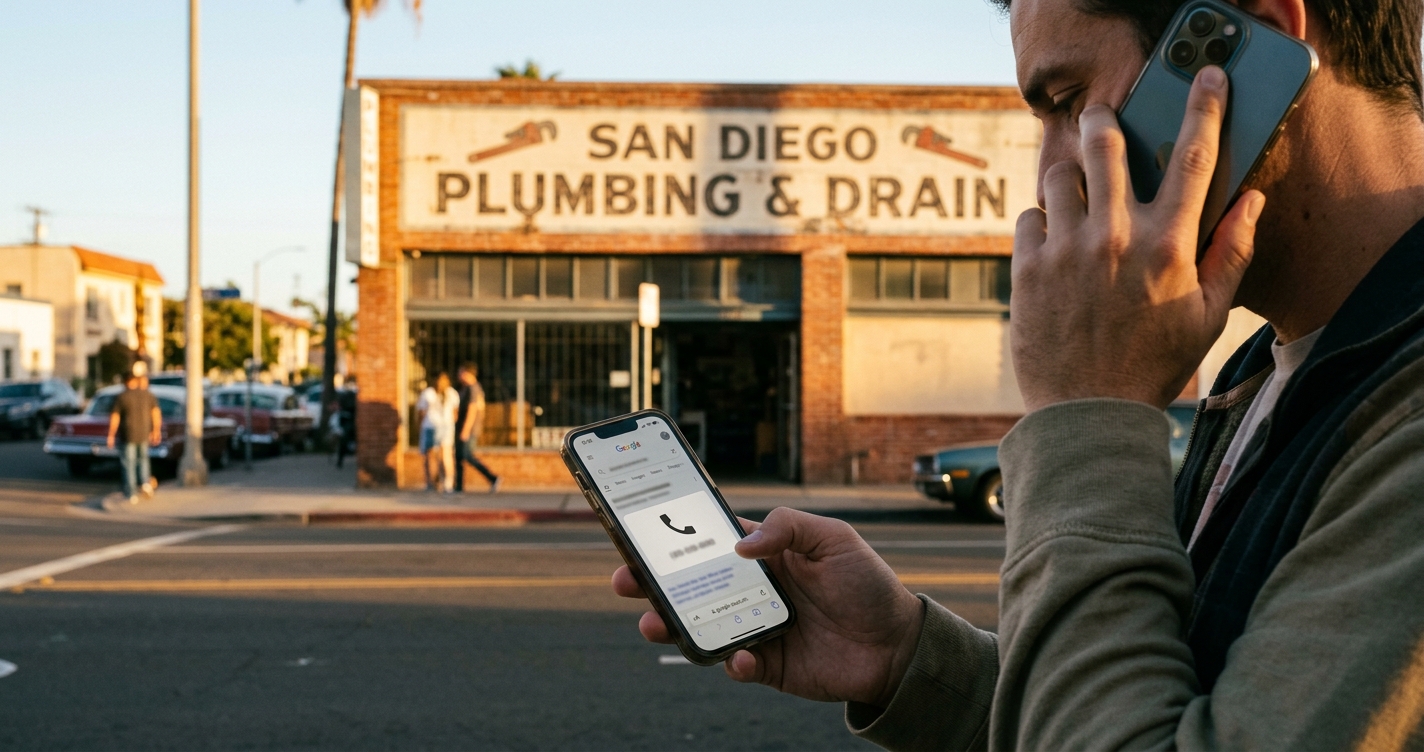
For local businesses especially, zero-click searches are critical because many local searches lead directly to phone calls or map navigation rather than website visits. A local search that shows your business in a maps result gets conversions even though there's no website click. A featured snippet citing your business as the source drives brand awareness and may lead to business when the user remembers your company later.
The Different Types of Zero-Click Search Results
Understanding the specific zero-click formats matters because each requires different optimization approaches.
Featured snippets are text excerpts pulled directly from websites and displayed in a box at the top of search results. Google extracts a paragraph, list, or table from a website and shows it as the answer. The source website gets credit and a link, but many users don't click through because they already have their answer. Featured snippets are some of the most valuable zero-click positions because they attribute source credit.
Answer boxes are Google's synthesized answers that combine information from multiple sources or are partially generated. These often don't attribute clear source credit, or they might show multiple sources. Answer boxes are harder to optimize for because Google synthesizes them rather than pulling them directly from one source.
Knowledge panels are information boxes that appear for specific entities (businesses, people, places, things). A knowledge panel for your business can show your location, hours, reviews, contact information, and photos. These are extremely valuable for local businesses because they drive direct engagement.
Local pack results show three business listings with maps, making them ideal for local service searches. While not purely zero-click since some users click for more detail, most interactions with local packs result in phone calls or map navigation rather than website clicks.
Image results represent another zero-click opportunity. Users searching for specific types of images often stop at the image results and don't click to external sites.
Carousels, timelines, and other rich results provide answers or information in special formats that reduce the need for external clicks.
Optimizing for Featured Snippets
Featured snippets represent the most controllable zero-click opportunity because they pull content directly from external websites. Winning a featured snippet doesn't require earning it through traditional SEO—you can optimize your existing content to be more snippet-friendly.
First, identify the keywords and questions for which featured snippets exist. Not every search has a featured snippet. Use SEO tools to find searches in your industry that currently show featured snippets, and identify what snippet type is shown.
Create content that directly answers these snippet-triggering questions. Featured snippets pull from existing content, so you need substantial content on your website that answers the question comprehensively. Write blog posts or service pages that thoroughly address the question that triggers the snippet.
Format your content for snippet extraction. Google favors certain content formats for different snippet types. For questions that might trigger a paragraph snippet, write clear, concise paragraphs that directly answer the question in 40-60 words. For comparison questions, use tables. For list questions, use bulleted or numbered lists.
Use the exact question as a heading. If Google's search intent analysis shows the question is "how much does water damage restoration cost," use that exact phrasing as an H2 heading in your content. This makes it easier for Google to identify your content as answering that specific question.
Place your best answer immediately after the heading. Google often extracts the content that comes right after relevant headings. Put your clearest, most concise answer in the first paragraph after the heading.
Target long-tail question variations. Many of your customers ask related questions: "What's the cost?" "How long does it take?" "What's the typical price?" Create content that answers each variation, and some of those variations might trigger snippets.
Monitor snippet changes regularly. Use SEO tools to track which of your pages are featured in snippets and watch for changes. When you lose a snippet, investigate why and adjust your content. When you win one, understand what worked.
Dominating Knowledge Panels and Local Visibility
Knowledge panels are extraordinarily valuable for local businesses because they appear prominently and drive direct engagement. However, you can't directly control your knowledge panel—Google generates it from multiple sources.
Ensure your Google Business Profile is completely, accurately filled out. Your knowledge panel information comes largely from your Google Business Profile, plus other sources. A complete, accurate profile is the foundation.
Build consistent information across all directory sources. Google's knowledge panel pulls information from multiple sources and shows what's consistent across them. When your information is identical across your official website, Google Business, Yelp, directories, and other sources, Google confidently displays it in your knowledge panel.
Create an official company Wikipedia or similar reference. If you're a notable company, create a Wikipedia page or equivalent reference that Google can pull from for your knowledge panel. This gives Google an additional authoritative source to reference.
Claim your Knowledge Panel on Google. You can now claim ownership of your business's knowledge panel on Google, which gives you limited ability to suggest edits and corrections. Use this feature to ensure accuracy.
Build citations and mentions on authority platforms. Knowledge panels reference information from sources Google trusts. The more mentions of your business on authority sites—industry associations, news sites, directories—the more information Google has to populate your knowledge panel.
Encourage customers to add photos and reviews to your Google Business Profile. Knowledge panels include photos, and more photos and recent reviews increase engagement with your knowledge panel.
Winning Maps and Local Pack Results
Local pack results are inherently partly zero-click—many users get what they need (location, hours, phone number, rating) without clicking through. However, you can optimize to make sure you appear in the local pack for relevant searches.
Optimize your Google Business Profile completely. This is the single most important factor for local pack visibility. A complete, well-optimized profile dramatically increases local pack appearance.
Build local citations on high-authority platforms. Google uses citation consistency and authority as signals for local pack ranking. Build presence on Google Business, Yelp, local directories, and industry-specific directories.
Encourage reviews and photo contributions. Local pack visibility is partly based on review volume and recency. Encourage customers to leave reviews, and regularly add photos to your profile.
Use local keywords in your service descriptions and business description. Write your business description and service descriptions with local keywords and specific services included.
Earn relevant, local backlinks. Links from local organizations, local media, and local businesses signal local relevance to Google.
Understanding Knowledge Panels Through Local Business Perspective
Local businesses benefit enormously from knowledge panels because a user seeing your business's knowledge panel with location, hours, reviews, and photos often has all the information they need without visiting your website. This zero-click result is actually valuable because it:
Displays your location and makes navigation easy (many users just open maps from the knowledge panel) Shows your phone number prominently, making calls easy Displays your rating and recent reviews Shows photos of your business and work Provides all basic information without requiring a website visit
The conversion path is different from website traffic—it's map navigation and phone calls rather than clicks. But the conversions are real and often higher quality because the user had enough information to decide.
Leveraging AI for Zero-Click Visibility
As AI search becomes dominant, zero-click optimization is becoming even more critical. AI systems generate answers without necessarily directing users to websites. Understanding how your business can be featured in AI-generated answers is increasingly important.
Create content that AI systems pull from when generating answers. This means comprehensive, well-structured, evidence-based content that directly answers questions. AI systems cite authoritative sources, so being the source cited in an AI answer is a form of zero-click visibility that's even more valuable than featured snippets.
Use ClawSignal's audit services to understand what information about your business is visible across the web and how AI systems are discovering your content. The audit shows where your business appears in AI-generated answers and where opportunities exist.
Build citation-worthy content that AI systems reference. As discussed in our earlier article on AI citation building, the tactics that win in AI answers overlap significantly with zero-click optimization.
Zero-Click Conversion Strategies
Winning zero-click visibility is valuable, but only if you convert that visibility into business. Since users aren't clicking through to your website, you need alternative conversion methods.
Make your phone number prominently displayed in all search results. Users seeing a featured snippet or knowledge panel need an easy way to call you. Ensure your phone number is visible on your Google Business Profile and easily accessible.
Optimize for phone calls from knowledge panels and featured snippets. Use call tracking numbers to understand which searches drive phone calls. This helps you understand which zero-click positions are actually converting.
Create brand awareness through visibility. Not every zero-click result needs to directly convert. Some build brand awareness. Users seeing your business cited in AI answers or featured in knowledge panels build familiarity. They might not call immediately but might remember you when they need your services.
Use location pages and service pages optimized for local searches. Zero-click visibility for specific locations and services is valuable. Ensure your location and service pages are optimized to appear in both traditional and zero-click results.
Add FAQ schema to your website. Structured FAQ schema can help your FAQs appear in rich results, including answer boxes. More visibility in answer boxes drives more awareness.
Measuring Zero-Click Impact
Zero-click traffic is harder to measure than traditional website clicks, but it's measurable.
Use Google Search Console to understand which keywords trigger zero-click results. Search Console shows your CTR for different queries. Queries with very low CTR often indicate zero-click results.
Track phone calls from branded and location searches. Use call tracking to understand how many calls come from search. This helps quantify the value of local pack and knowledge panel visibility.
Use Google Analytics to compare behavior from search traffic that does click through. Users who click from featured snippets or knowledge panels behave differently than users from traditional search results. Understanding this helps you measure the value of different zero-click results.
Ask customers how they found you. In your intake process or initial conversations, ask how customers found you. Track how many mention seeing you in search results, maps, or other SERP features.
Monitor your search result appearance. Track when your business appears in featured snippets, knowledge panels, local packs, and answer boxes. Changes in these appearances correlate with changes in awareness and business.
Building a Zero-Click Optimization Strategy
Start with an audit of your current zero-click visibility. Where does your business appear in featured snippets? Do you have a knowledge panel? Are you ranking in local packs? Use ClawSignal's audit to understand your baseline.
Identify high-value zero-click opportunities. Which searches for your industry have featured snippets? Which drive local pack results? Which have rich answer boxes? Prioritize opportunities that are high-intent (close to purchase decision) and have significant search volume.
Create and optimize content for snippet-triggering questions. Write blog posts or service pages that directly answer snippet questions, format them for extraction, and optimize them for featured snippet appearance.
Optimize your Google Business Profile completely. This is foundational for knowledge panel visibility and local pack appearance. Don't skip any fields.
Build consistency across directory sources. Ensure your business information is consistent across Google Business, Yelp, industry directories, and your website.
Monitor and adjust. Track zero-click appearance and phone call volume. When you appear in new zero-click results, understand what triggered it. When you disappear, investigate why.
Common Mistakes in Zero-Click Optimization
Writing long, comprehensive answers that are too long for snippets is a mistake. Featured snippets work with specific lengths. An 50-word answer is extractable. A 500-word answer isn't. Vary content length strategically.
Not optimizing for featured snippets while competitors do. If your competitors are winning featured snippets for high-value keywords, you're losing visibility and potential business. Actively optimize for snippet opportunities.
Ignoring knowledge panel accuracy. If your knowledge panel shows wrong hours, wrong location, or missing information, you're actively driving business away. Keep it accurate.
Not building local citations while competing in local search. Local pack visibility requires citation consistency. Don't skip this fundamental.
Underestimating phone call value. Conversion isn't just clicks anymore. Optimize for calls and measure call volume from search. This is often where real business happens.
FAQ
Q: If my featured snippet is winning, am I losing clicks? A: Not necessarily. A featured snippet provides visibility and some users will click through to see more information, while others will call or remember you later. The true measure is overall business generated, not just website clicks.
Q: How long does it take to win a featured snippet? A: It varies widely. If your content is already ranking for the keyword, winning a snippet might take weeks. If your content isn't ranking yet, you need to build ranking first, which could take months. Create snippet-optimized content and monitor for changes.
Q: Should I remove content that's winning featured snippets to keep people clicking my website? A: No, that would be counterproductive. Featured snippets are valuable visibility. Instead, optimize those pages for conversions through phone calls, contact forms, or follow-up CTAs.
Q: How do I know if users are calling from zero-click results? A: Use call tracking numbers and ask customers how they found you. You won't always get perfect data, but you can estimate based on patterns. Users calling from searches that showed knowledge panels or featured snippets often mention that.
Q: Can I optimize for answer boxes the same way I optimize for featured snippets? A: Partially. Answer boxes are less directly controllable because Google synthesizes them from multiple sources. Optimize for comprehensive, authoritative content on your topic, and some answer boxes will include you. But featured snippets are more directly optimizable.
Q: Does appearing in answer boxes drive business like featured snippets do? A: It depends on how the answer box is constructed and attributed. Some answer boxes clearly show the source, driving citations similar to featured snippets. Others synthesize information without clear attribution. All answer box visibility helps brand awareness.
Q: Should I focus on zero-click optimization or traditional SEO? A: Both matter. Zero-click optimization improves visibility in answer boxes, featured snippets, and knowledge panels. Traditional SEO improves website rankings for searches that do result in clicks. A comprehensive strategy includes both.
Sources
- Google Search Results Study - Zero-Click Analysis (2024-2025)
- Featured Snippet Optimization Research
- Local Pack and Knowledge Panel Visibility Study
- Search Traffic Attribution and Zero-Click Impact Research
- ClawSignal AI Visibility Analysis and Zero-Click Search Data