# SEO for Barbers: 5 Moves That Fill Every Chair
I asked ChatGPT to name the best barber shops in San Diego. It gave me five names. I checked — two of them had closed. One had 9 Google reviews and a 3.8 rating. The other two were legitimate shops with strong online presences.
Then I searched Google Maps for "barber near me" from three different San Diego zip codes. Different results every time, but the same pattern: the barber shops that showed up all did five specific things that the invisible ones didn't.
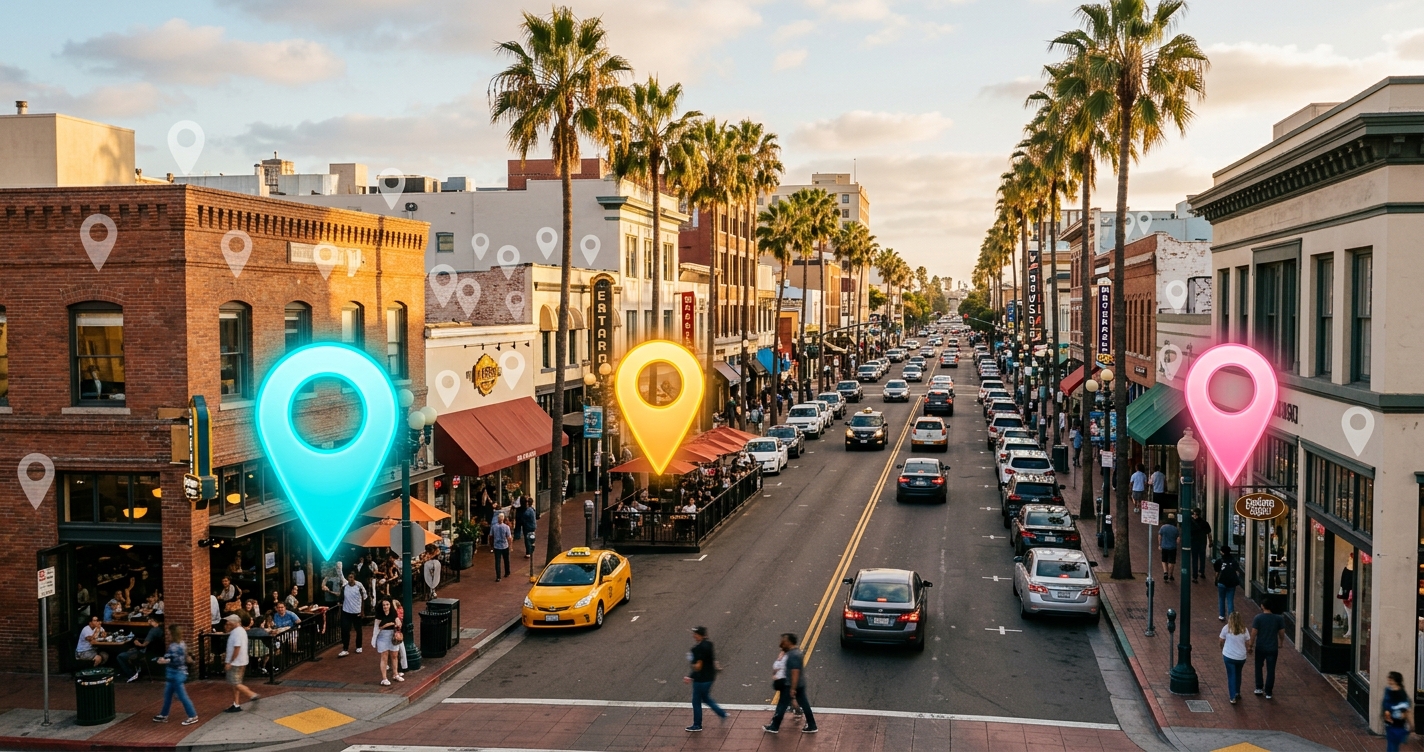
San Diego has over 400 barber shops. Google's local pack shows three. AI platforms recommend five at most. If you're not in those spots, potential clients walk past your shop and into your competitor's because that's the one Google — or ChatGPT — told them about.
Here are the five moves that separate the shops that stay booked from the ones with empty chairs at 2 PM on a Saturday.
Move 1: Own Your Google Business Profile
Your Google Business Profile is the most important piece of digital real estate your barber shop has. More important than your website. More important than your Instagram. When someone searches "barber near me," Google pulls from GBP first — your website is secondary.
Most barber shops claim their GBP and stop there. That's like unlocking the front door but never turning the lights on. Here's what a fully optimized barber GBP looks like:
Business category: Set your primary category to "Barber shop." Not "Hair salon," not "Beauty salon." Google treats these differently. If you also offer beard trimming, add "Beard trimming service" as a secondary category.
Services with pricing. List every service with a description and price range. "Men's haircut — $25-35." "Beard trim — $15." "Hot towel shave — $30." Google displays these in your listing, and they help match your shop to specific search queries like "hot towel shave San Diego."
Business hours. Set accurate hours including holiday schedules. Google penalizes listings with outdated hours because it creates bad user experiences. If you're closed Mondays, say so. If you take walk-ins until 7 PM but appointments until 8 PM, note it.
Photos. This is where most barber shops leave massive opportunity on the table. Businesses with 100+ photos get 520% more calls than businesses with fewer than 10, according to Google's own data. Upload photos of your shop interior, your chairs, finished haircuts (with client permission), your team, your storefront, and your products. Update monthly with fresh photos. Google rewards recency.
Posts. Google Business Profile posts expire after 7 days, but they signal to Google that your business is active. Post weekly: a photo of a fresh fade, a special for first-time clients, or a "booking available today" update. It takes 2 minutes and it moves the needle.
Q&A section. Most barber GBP listings have zero questions answered. Seed your own: "Do you take walk-ins?" (Yes, walk-ins welcome Mon-Sat), "Do you cut kids' hair?" (Yes, kids 12 and under $20), "Is parking available?" These show up prominently in your listing and answer questions before someone calls.
Move 2: Get Reviews on Autopilot
We covered the review system in depth in our Google reviews guide, but here's the barber-specific version:
Barber shops have a built-in advantage for reviews: you see the same clients regularly, the service is personal, and the relationship is real. A barber who cuts someone's hair every three weeks has 17 review opportunities per year with that one client.
The after-cut ask. When the client looks in the mirror and likes what they see — that's the moment. "Glad you like it. Hey, if you get a sec, a Google review really helps us out. I'll text you the link." That's it. Not pushy. Not weird. Just direct.
The text follow-up. Set up a simple system: at the end of each day, text your review link to every client you saw. Tools like Square (which many barber shops already use) can automate this. Or just copy-paste the link in a text. Thirty seconds per client.
Target: 10+ reviews per month. At that pace, you'll hit 100+ reviews within a year. In most San Diego neighborhoods, that puts you in the top 3 barber shops by review count — which correlates directly with showing up in the Google 3-pack.
Respond to every review. Especially the detailed ones. When a client writes "Marcus always nails the skin fade," reply with "Thanks, bro — see you in three weeks." It's authentic, it signals to Google that you're active, and it makes the next client more likely to leave their own review.
Move 3: Build a Website That Converts
"I don't need a website, I have Instagram." We hear this from barber shops constantly. Here's why it's wrong:
Google can't rank your Instagram page for "barber near me." It can rank your website. AI platforms like Perplexity and ChatGPT pull from websites, not Instagram posts. A website gives you a permanent, searchable, indexable presence that social media doesn't.
Your barber shop website doesn't need to be fancy. It needs to be functional:
Homepage. Your shop name, neighborhood, services, hours, and a "Book Now" button. Include your primary keyword naturally: "Located in North Park, [Shop Name] has been San Diego's go-to barber shop since [year]."
Services page. Every service with a description and price. This page targets long-tail searches like "beard trim North Park" and "kids haircut San Diego." Each service should have 2-3 sentences describing it — not just a price list.
About page. Your story, your barbers' experience, why your shop is different. Include photos of your team. Google's E-E-A-T framework values experience and expertise — showing that your barbers have 10+ years of experience signals authority.
Contact page. Address, phone, embedded Google Map, hours, and your booking link. Add LocalBusiness schema markup to this page (or sitewide) so Google can parse your business information programmatically.
Blog (optional but powerful). Even one post per month — "Best Fades for 2026," "How to Maintain Your Haircut Between Visits," "Beard Care Tips for San Diego Weather" — gives you content that ranks for long-tail keywords and demonstrates expertise to both Google and AI platforms.
The website should load in under 3 seconds on mobile. Over 60% of "barber near me" searches happen on phones. If your site is slow, Google drops you. Use a simple template — Squarespace, Wix, or even a single-page site. Don't overthink the design.
Move 4: Nail Your Local Keywords
Most barber shops don't think about keywords at all. The ones that rank think about them strategically.
Your primary keywords — the ones you want to rank for — fall into three categories:
Category 1: Location + service. "Barber shop [neighborhood]," "haircut [city]," "fade [zip code]." These are the highest-intent searches. Someone searching "barber shop North Park" is looking to book right now.
Category 2: Specialty searches. "Skin fade San Diego," "beard trim near me," "Black barber San Diego," "kids haircut [neighborhood]." These are lower volume but extremely high conversion because the searcher has a specific need.
Category 3: Question-based searches. "Best barber in San Diego," "how much does a haircut cost in San Diego," "walk-in barber shops open now." These appear in Google's "People Also Ask" and are prime targets for AI platform recommendations.
Here's how to use them:
Put your primary location + service keyword in your homepage title tag and H1. Example: "Premium Barber Shop in North Park, San Diego."
Create individual sections or pages for each specialty service, optimized for that keyword. A page about beard trimming with the title "Expert Beard Trim in San Diego — Walk-Ins Welcome" targets a specific search that your homepage can't.
Answer the question-based searches in a FAQ section on your website. These are featured snippet opportunities, and they're exactly the kind of content AI platforms pull into their recommendations.
Track your keyword positions monthly. If you're on page 2 for "barber shop North Park," you know exactly where to focus. ClawSignal tracks keyword rankings and AI visibility across 9 platforms — check where you stand for free.
Move 5: Show Up on AI Search Platforms
This is the move nobody else is telling barber shops about.
When someone asks ChatGPT "best barber in Pacific Beach," it doesn't search Google. It generates an answer based on its training data and, in some cases, live web searches. The barber shops it recommends are the ones with the strongest overall online presence: consistent information, high review counts, detailed website content, and mentions on authoritative sites.
We tested this at ClawSignal. We asked ChatGPT, Perplexity, Claude, and Gemini to recommend barber shops across 5 San Diego neighborhoods. Out of 400+ shops, fewer than 30 were mentioned by any platform. The ones that appeared had three things in common:
- 100+ Google reviews with a 4.5+ average
- A real website with service descriptions, not just an Instagram link
- Mentions on multiple sites — Yelp, local blogs, neighborhood guides, Google Business Profile with active posts
If your shop has all three, you're already ahead of 90%+ of the competition for AI visibility. If you're missing any of them, that's where to focus.
The opportunity here is timing. LLM SEO for barber shops is where Google SEO was 15 years ago — almost nobody is doing it, so the first shops to optimize will own their neighborhoods across AI platforms for years.
The 90-Day Plan for Barber Shop SEO
Week 1-2: Fully optimize your Google Business Profile. Upload 20+ photos. Set accurate hours and services with prices. Write 5 Q&As. Post your first GBP update.
Week 3-4: Set up your review system. Get the direct review link. Write your after-cut script. Set up your text follow-up. Start asking every client.
Month 2: Build or update your website. Homepage, services, about, contact. Add LocalBusiness schema. Make sure it loads fast on mobile. Write one blog post.
Month 3: Track results. Check your Google Maps position for your top 3 keywords. Count new reviews. Run an AI visibility scan to see if you're showing up on ChatGPT and Perplexity. Double down on what's working.
Most barber shops will see measurable improvements — more map pack appearances, more calls from Google, more walk-ins who say "I found you online" — within 90 days of implementing these five moves.
FAQ
How much does SEO cost for a barber shop? You can do the GBP optimization, review system, and basic website yourself for free (minus website hosting, which runs $10-20/month). Professional local SEO services for barber shops typically range from $200-500/month in San Diego. ClawSignal's Starter tier at $79/month includes keyword tracking, blog content, GBP optimization, and monthly reports.
Should I use Instagram or a website for my barber shop? Both, but a website first. Instagram is great for showcasing your work and building community, but Google can't rank your Instagram profile for local searches. Your website is what appears in Google results and what AI platforms reference. Use Instagram to drive engagement, use your website to drive search traffic.
How long does it take for barber shop SEO to work? GBP optimization and review improvements can show results in 30-60 days. Website SEO typically takes 3-6 months to gain significant traction. The barber shops we've tracked that implement all five moves consistently see noticeable increases in calls and walk-ins within 90 days.
Do I need to blog as a barber? It's not required, but it helps significantly. Even one post per month about haircut trends, grooming tips, or local San Diego content gives Google fresh content to index and gives AI platforms more information to reference when making recommendations. The barber shops that appear most often in AI recommendations all have some form of content beyond their basic website pages.
Sources: Google Business Profile Insights data, BrightLocal Local Consumer Review Survey (2025), ClawSignal AI visibility scan data (2026), Google Search Central documentation.