Local SEO built for your industry, not a template
A dentist is found by treatment. A restaurant is found by dish. A plumber is found at 2 AM. The fifteen playbooks below are built on that difference — and on our own measurement of what ChatGPT, Claude, Gemini, and Grok already say when someone asks for a business like yours.
How often AI names nobody at all — by industry
We asked the four assistants to recommend a local business in ten US cities, in each of these categories, and recorded what they actually said. The bar is the share of answers that named no specific business — generic advice instead of a recommendation. A tall bar is not bad news for you; it is unclaimed ground.
Source: the ClawSignal AI Visibility Index, July 2026 edition · 150 markets · 600 assistant answers — the cut shown here is the fifteen categories on this page. Engines measured: ChatGPT, Claude, Gemini, and Grok. AI answers vary by day and by run, so treat this as a snapshot. The live Index is published monthly and kept forever.
The four we are asked about most
Every playbook runs the same engine. These four get the most surface area here because they are where we see the most demand, and where the gap between what a business deserves and what the assistants actually say is widest.
The category AI is worst at — which is the opening
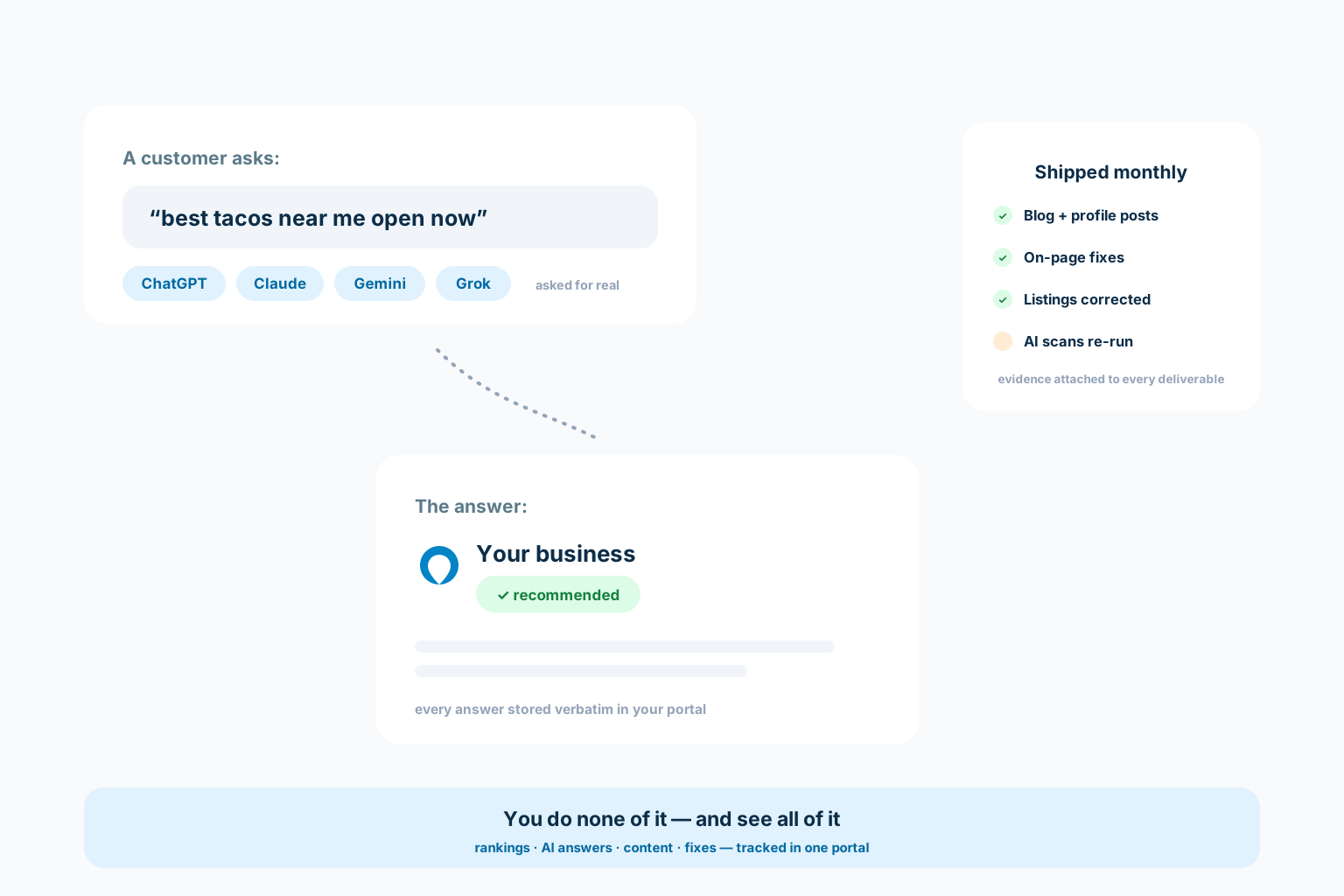
Restaurants had the highest empty-answer rate of any category we measured: in 65% of restaurant answers, the assistant gave generic advice ("check Yelp for highly-rated spots") instead of naming a single restaurant. The mechanics behind that are fixable and specific to food: menus trapped in PDFs or images that Google cannot read, dish-level searches with no page to land on, and hours that disagree between your site, Yelp, OpenTable, and the delivery apps. We convert the menu into crawlable HTML organized by category, build pages for the dishes and neighborhoods you want found in, and make every listing agree with every other listing.
Treatment-level pages, not one "Services" page
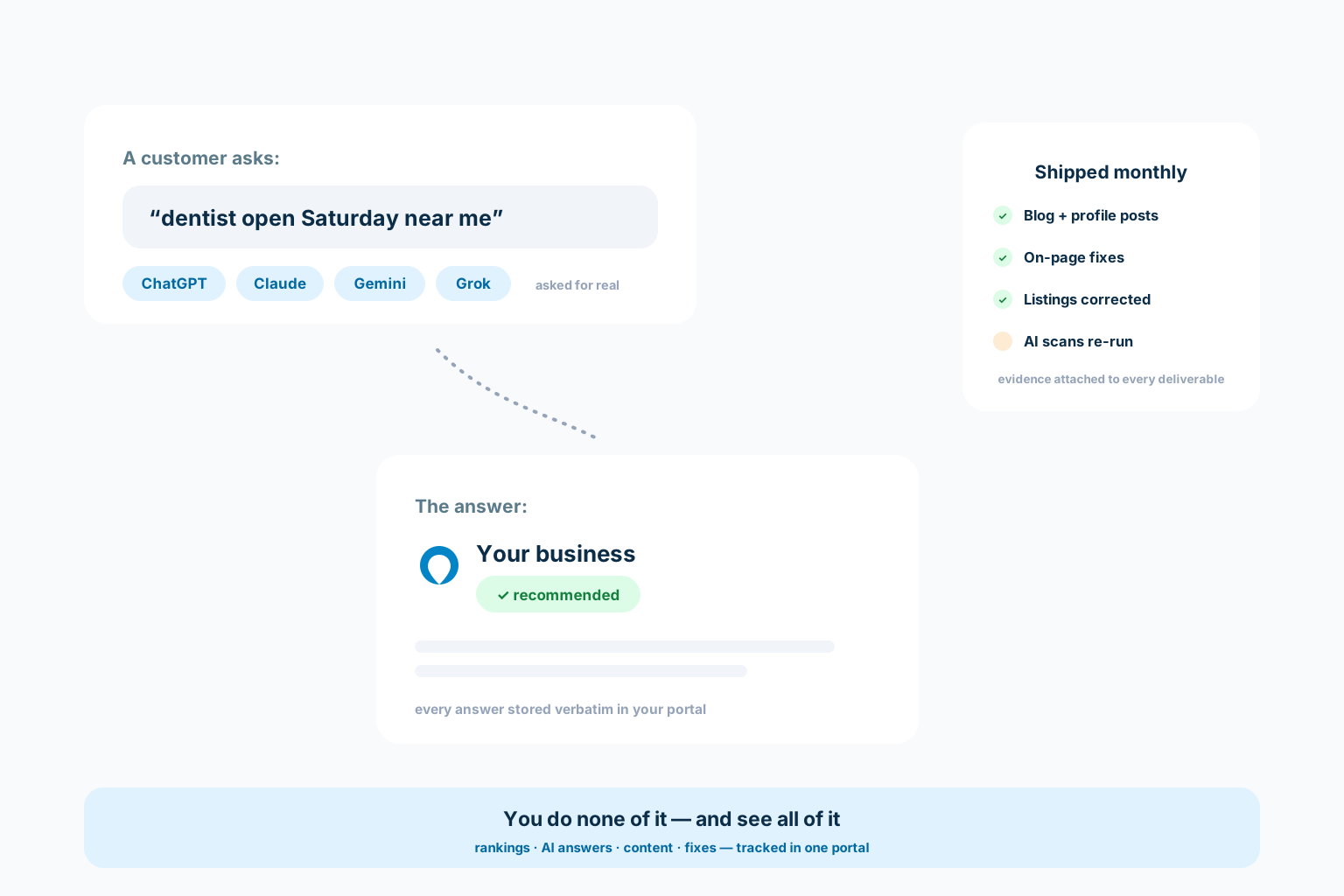
Dental search is treatment-shaped: patients do not search "dentist," they search "same-day crown," "Invisalign provider near me," or "emergency tooth extraction cost." One combined Services page cannot rank for all of it. We build a dedicated page per treatment per neighborhood, each carrying the healthcare schema Google reads for providers, and keep titles, headings, canonicals, and image alt text correct as the site grows. In our July measurement, 42.5% of dentist answers named no practice at all — the assistants are looking for evidence and not finding enough of it.


Urgency searches convert hardest and rank easiest
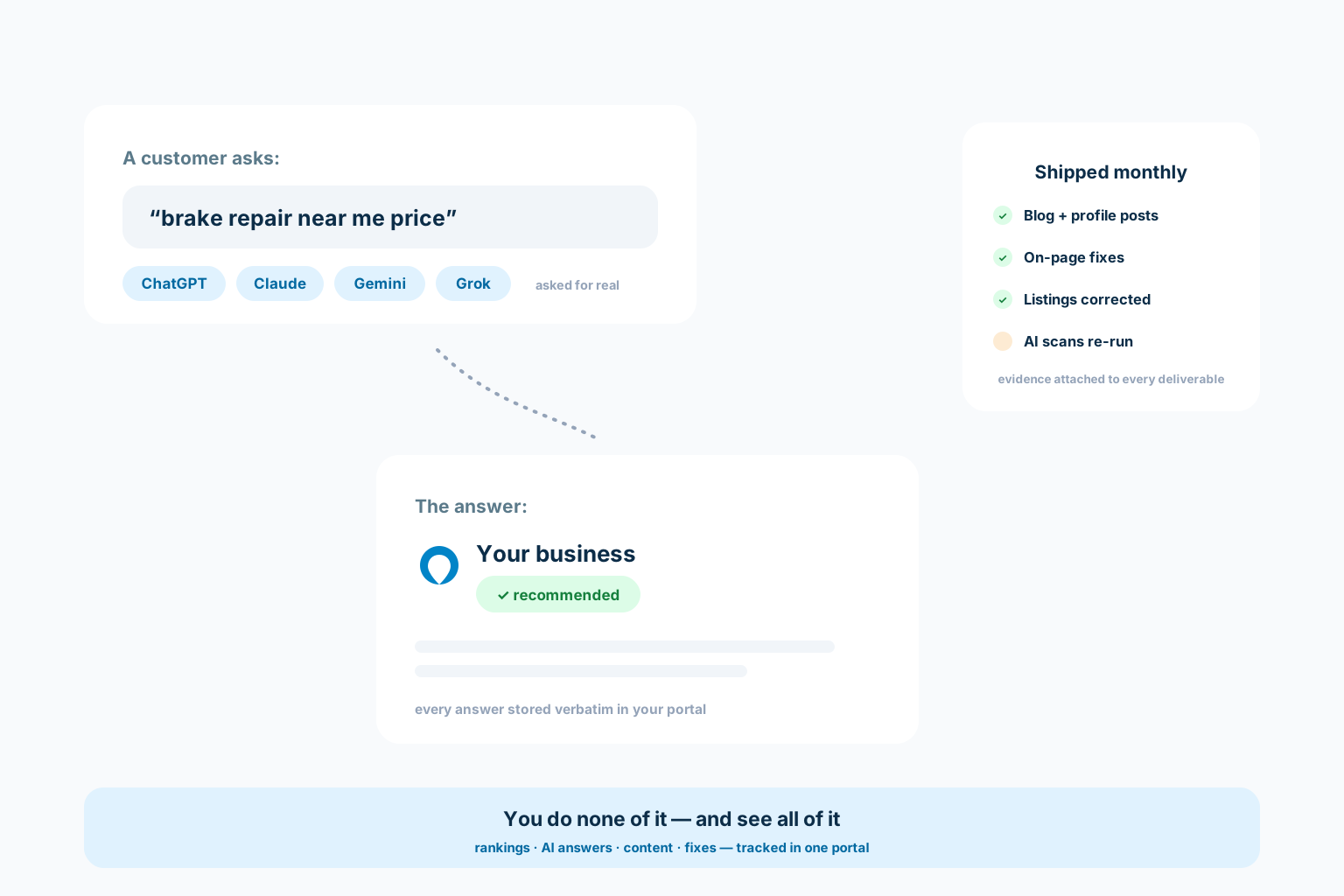
Nobody researches a transmission shop for a week. Auto repair search is compressed into minutes — "check engine light near me," "brake repair open now" — and the shop that owns those exact phrases wins the call. We build a page per repair type per service area, with the AutoRepair and Service schema Google expects, and keep your hours and address identical across the auto-specific directories Google cross-checks (RepairPal, AutoMD, CarFax Shop). 35% of auto-repair answers named no shop at all in July.
Visual SEO is the channel most salons never turn on
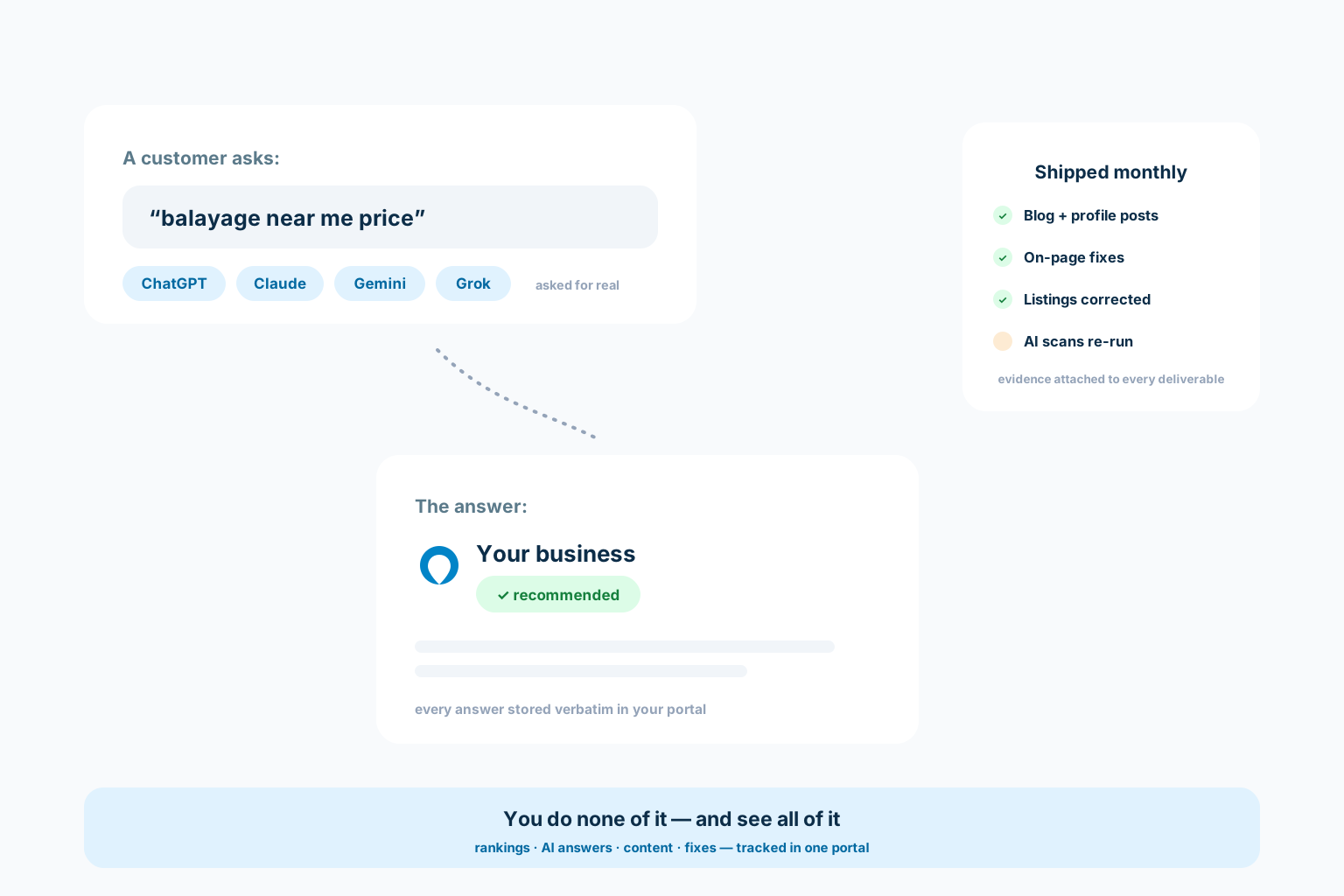
Hair is chosen on photographs, and Google Images is routinely a salon's second-largest traffic source — but only when the photographs are legible to a crawler. Most salons upload beautiful work with no alt text, no caption, and no service page behind it, which makes it invisible. We tag every image with descriptive alt text, connect each one to the service page it belongs to, and build the high-margin service pages (balayage, extensions, keratin, bridal) that the highest-intent searches actually land on.

All fifteen playbooks
Each one covers the page architecture, the schema Google expects, the third-party listings it cross-checks, and the searches worth winning in that category.
Seven things that change from one industry to the next
This is the argument against buying generic local SEO. Each of these shifts the work materially — and getting them wrong is how a business ends up paying for a site that ranks for nothing in particular.
- 1
The unit a customer searches in
A dentist is found by treatment, a restaurant by dish, a contractor by project type, a lawyer by case type. That unit decides your entire page architecture — one page per unit per area, not one page per service line. Get the unit wrong and you build a site that ranks for nothing in particular.
- 2
How long the decision takes
Emergency plumbing and auto repair are decided in minutes; a gym membership takes three to five comparisons; choosing a lawyer or an accountant can take weeks. Short decisions need availability signals (open now, hours, phone). Long decisions need comparison content, pricing transparency, and proof.
- 3
Which schema Google expects
Dentists and medical practices need provider markup, restaurants need Restaurant and Menu, lawyers need Attorney and LegalService, auto shops need AutoRepair. This is not cosmetic — it is how Google decides whether you belong in a category result at all, and it is one of the first things we fix.
- 4
Whether images are a ranking channel
For salons, restaurants, contractors, and real estate, images are a primary discovery surface, so alt text and image-to-page connections do real work. For accountants and lawyers, they are close to decorative. Spending equally on both is how budgets get wasted.
- 5
Which third-party listings Google cross-checks
Restaurants get validated against Yelp, OpenTable, and the delivery apps; gyms against ClassPass and Mindbody; auto shops against RepairPal and CarFax; salons against Booksy and Vagaro. Disagreement between those and your site is a live ranking problem, and the specific list is different for every category.
- 6
How much the assistants already know
This is the newest variable and the one almost nobody measures. In our July index, the same question format produced a named business 67.5% of the time for lawyers and only 35% of the time for restaurants. Where the assistants are empty, the first business to build legible evidence tends to become the default answer.
- 7
What "competition" even means
A dentist competes with ten practices inside three miles. A real estate agent competes with every agent in the county plus Zillow and Redfin. A SaaS-adjacent local service competes nationally. The radius changes the keyword set, the content depth required, and how long results take.
How a playbook actually runs
Same five steps in every category — only the specifics change. Each one is checkable, so you can hold us to it rather than take the word “SEO” on faith.
- 1
Measure before touching anything
We scan your site and ask all four assistants to recommend a business like yours in your city, then record what they said — whether they named you, who they named instead, and whether Google showed an AI Overview on the same query. That becomes the baseline every later claim is measured against. Nothing here is a projection; it is a reading you can re-take at any time.
- 2
Build the unit your customers search in
Treatment, dish, repair type, practice area, class — whichever unit your category is found by. Each one gets its own page for each area you serve, with the schema Google expects for your business type, internal links that actually connect them, and titles and headings that stay correct as the site grows.
- 3
Make every outside signal agree
Google validates you against the directories your category lives in, and disagreement between them is a live ranking problem. We find where your name, address, hours, and categories disagree across those listings and reconcile them. Connect Google Business Profile to sync its evidence and receive post and review-reply drafts; every exact public action waits for your approval.
- 4
Improve what already exists before adding more
Most sites have pages sitting at position 11 to 30 — visible enough to earn impressions, too low to earn clicks. Those are the cheapest wins available, so the engine reads that list first and drafts improvements for your approval before it proposes anything new. You see the queue, and nothing publishes without you.
- 5
Re-measure and show the work
We re-run the same assistant questions and the same site checks on a schedule, and put impressions, positions, assistant visibility, and the delta against your baseline in a portal you can open any day of the week — not a monthly PDF of adjectives. When a number did not move, the portal says it did not move, and the next cycle targets that instead of celebrating something easier.
Industry playbooks — questions
Do you only work with these fifteen industries?
No — these are the fifteen we publish detailed playbooks for because they are where we have the most measured data and the most demand. The engine itself is industry-agnostic: it reads your site, your search demand, and your assistant visibility whatever the category. If you do not see yours, the free scan still works and the workflow is the same.
What actually differs between an industry playbook and generic local SEO?
The page architecture, the schema, the third-party listings we reconcile, and the search intents we target. Generic local SEO optimizes a homepage and a services page. An industry playbook builds the unit a customer actually searches in — a treatment, a dish, a repair type — and then makes every external signal agree with it.
Where do the numbers on this page come from?
The AI Visibility Index — our own measurement, published free and citable. We ask ChatGPT, Claude, Gemini, and Grok to recommend local businesses across ten US cities in each category, and record what they actually said. The figures here are the July 2026 edition; the live Index is updated monthly and archived forever.
Is Google Business Profile posting included?
Yes. Connect the profile and we keep it current — categories, services, attributes, scheduled posts, and a reply drafted for every review that you approve before it posts. Everything else that feeds the same ranking signals — service pages, schema, citations, site health, review strategy — runs today.
How quickly does an industry playbook show results?
Content and technical fixes are typically live within the first weeks; ranking movement follows Google's own crawl and evaluation pace, which is usually measured in weeks to a few months, and varies with how competitive your category and city are. We track it either way — you see impressions, positions, and assistant visibility in the portal rather than a monthly claim.
Keep going
Find the playbook your market needs
Run the free scan to see where your business is visible, where competitors are winning, and which action ClawSignal should complete first.