Integrations
Your platform, connected with controls
ClawSignal checks what each connection can actually do, routes eligible work through approval and verification controls, and prepares paste-ready packages where a safe write path does not exist.
Supported website adapters: 7
WordPress
A write-capable adapter for posts and supported on-page fields. Every proposed change remains subject to policy, approval, verification, and rollback controls.
Ghost
A write-capable adapter for posts, metadata, schema, and supported page fields, governed by the same release controls.
Webflow
CMS collection publishing is supported. Exact permissions and available operations are checked from the connected site before work is queued.
Shopify
Blog publishing is supported. Storefront changes remain limited to the permissions and adapter operations verified for the connection.
Cloudflare Pages
Git-backed delivery is supported when a verified repository and deploy path are connected.
Custom webhooks
Structured content and change packages can be delivered to a customer-controlled endpoint with an explicit capability contract.
Supabase-backed sites
Mapped database content can be updated through a scoped adapter after its table, columns, permissions, and rollback path are verified.
Data & account connections
Google Business Profile
Connect through Google OAuth to sync profile, review, and performance evidence. Every post and review reply requires the customer to approve the exact payload shown in Notifications.
Google Search Console
Query, page, position, and indexing evidence for connected properties, with missing and failed observations preserved explicitly.
Google Analytics 4
Your real traffic beside your SEO results, in the portal and the monthly report.
Stripe billing
Self-service subscription management from your portal.
MCP server
Claude, Cursor, or any Model Context Protocol client reads your audits, rankings, and scans directly.
REST API
Unlimited keys on every plan — the same data the portal renders, over JSON.
Closed platforms: paste-ready, never pretend
On closed platforms with no content API — Squarespace and GoDaddy’s Website Builder — we can’t make changes for you, so every fix arrives ready to use: the exact text and code, prioritized by impact, to paste into your editor in minutes.
DNS automation runs on Cloudflare, GoDaddy, Porkbun, DNSimple, and AWS Route 53 (redirect rules on Cloudflare).
Coming soon — labeled, not sold
Each ships when it genuinely works. The features page tracks the full list.
How publishing actually works
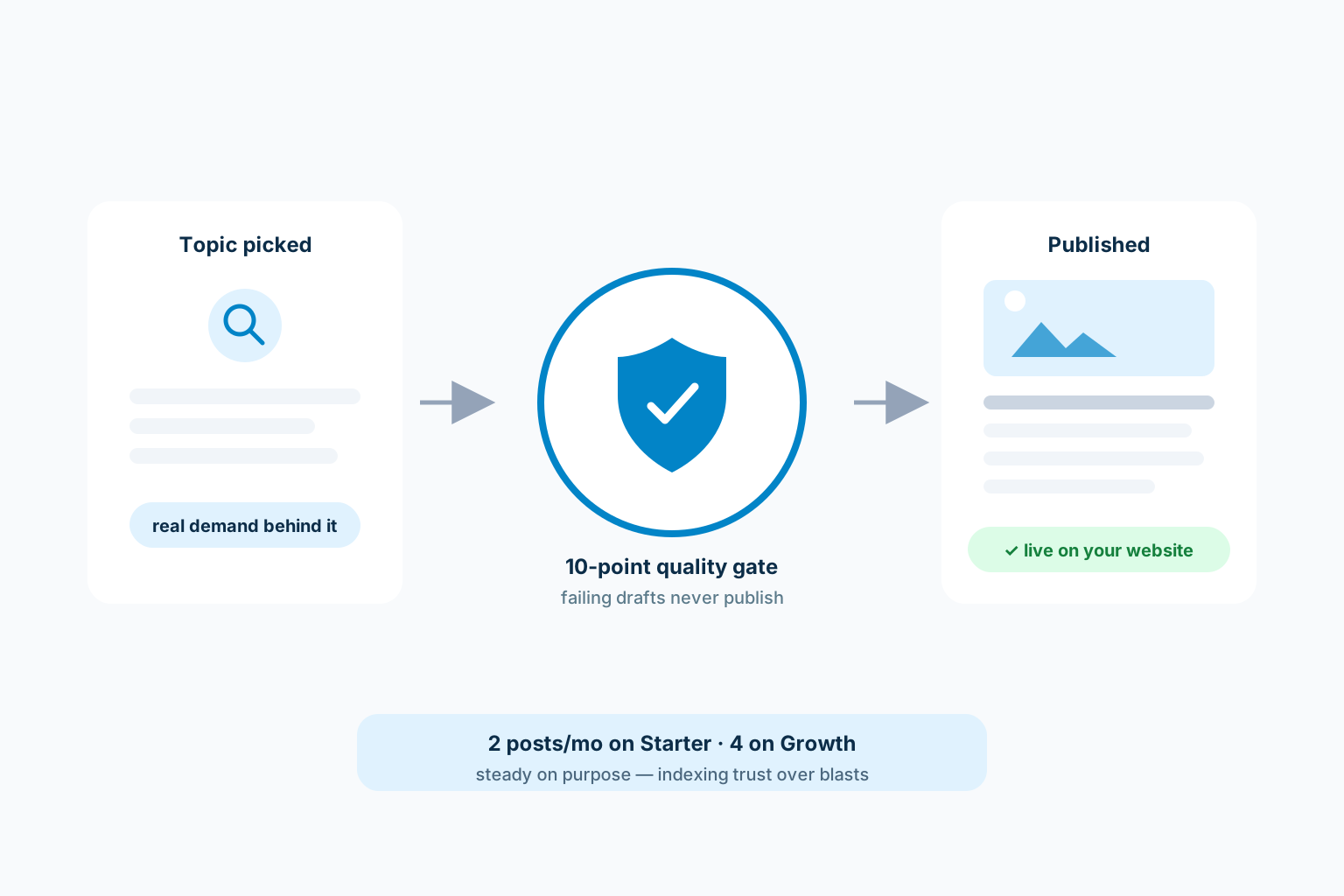
Content and page changes enter a governed queue. The system checks source evidence, quality, campaign authority, customer policy, adapter capability, and rollback readiness before a write can become eligible. The target is then verified after application; a failed verification keeps or returns the work to a non-published state.
Two design rules keep this honest. First, capability claims come from a matrix in the codebase — the same source that gates what the software will attempt. Second, when a platform closes its doors (no content API), we say so and switch to paste-ready delivery instead of quietly failing. You always know which mode your site is in from the portal, and the free scan tells you before you ever pay.
A supported adapter means ClawSignal has a defined path for specific operations; it does not mean every change is safe or permitted. Closed builders can still receive measured findings and paste-ready packages. Platform migration should follow a verified requirement, not a promise of unrestricted automation.
Every write path is narrower than the account connection. ClawSignal records the intended site, operation, source version, approval state, and rollback material before applying an eligible change. A stale source, missing consent, failed quality check, unavailable provider, or verification mismatch stops that action without turning the rest of the connection into permission. Access remains reversible from the customer portal.
One connection, scoped permissions
Connect your platform during onboarding. ClawSignal records the operations the adapter can perform, then logs each proposal, decision, application check, and rollback state in the portal.
Illustrative layout — decorative shapes, not data. Your real deliverables are logged in your portal.
Integrations FAQ
Which website platforms are fully automated today?
WordPress, Ghost, Webflow, Shopify, Cloudflare Pages, custom webhooks, and mapped Supabase content have supported adapters. Capability is checked per connection and operation. Eligible changes still pass policy, approval, proof, canary, verification, and rollback gates; an adapter connection is not blanket publishing permission.
What happens if my site is on Squarespace or GoDaddy Website Builder?
Those builders expose no content API, so nothing can write to them — us or anyone honest. The scans, tracking, and content still run; fixes and posts arrive as prepared, paste-ready packages prioritized by impact. Migrating to a supported platform unlocks full automation.
Is the Google Business Profile integration live?
Yes. Google approved ClawSignal for Business Profile API access. Customers connect profiles they own or are authorized to manage through Google OAuth. Profile reads and review sync are available; posts and review replies publish only after the customer approves the exact draft and action.
What is the MCP server?
A live Model Context Protocol server: point Claude, Cursor, or any MCP-capable assistant at it with an API key from your portal, and your assistant can read audits, rankings, AI-visibility answers, and deliverables directly — no glue code.
When do Zapier, Netlify, and Wix arrive?
They are being finished now and are labeled coming soon everywhere they appear — including the pricing page. Zapier opens to the first 50 users. Full Wix support publishes to the Wix Blog through the official app-instance authorization flow, so you approve the connection inside your own Wix account. We ship when they genuinely work, and we never sell them as live before that.
Get found. Do none of the work.
Enter your email, pick a plan, and publishing starts on your platform this week. No contracts, cancel anytime.