The last week of July 2026 stacked up more assistant-driven local search news than most quarters. The ChatGPT search and local business recommendations updates July 2026 coverage centered on OpenAI courting small businesses directly and licensing a major review dataset. For a San Diego taco shop or dental office, that means the assistant answering "who's the best near me" is now pulling from sources you can actually influence. This roundup covers what shipped, what it means, and what a local operator should do about it.
We run AI Visibility Tracking at ClawSignal, so we watch these shifts against real assistant responses — not press releases. If you want to see where you already stand across ChatGPT, Claude, Gemini, and Grok, our San Diego AI visibility and local SEO audit is the fastest read.
What Happened in ChatGPT Search During July 2026
Two developments defined the period. OpenAI announced a ChatGPT for small business program, per OpenAI's own announcement. The framing signals OpenAI wants small operators as active participants, not passive data points.
The bigger structural move was data. Yelp licensed its reviews and business data to OpenAI for ChatGPT integration, as reported by citybiz.
Both dropped inside a single week, which is why so much trade coverage clustered around late July. The through-line: assistant recommendations are getting more structured, more sourced, and more commercial.
Alongside the platform news, reporting framed a behavior change. WSOC TV described asking ChatGPT for a recommendation as replacing the Google search for some users. That is the demand-side story behind the supply-side deals.
Why This Matters for San Diego Businesses
San Diego operators feel assistant-first search early. Beach visitors and new transplants tend to ask an assistant for a "best fish taco in North Park" answer before they open a maps app — a habit consistent with the shift WSOC TV reported.
The Yelp licensing deal changes the math for review strategy. If ChatGPT is reading structured review data, your Yelp presence is no longer just a directory listing — it may feed the answer an assistant gives directly. That reframes review response management from reputation hygiene into visibility work.
Local News Pasadena summarized the underlying dynamic well: word of mouth didn't die, it moved. The recommendation still travels person-to-person — it just routes through an assistant now.
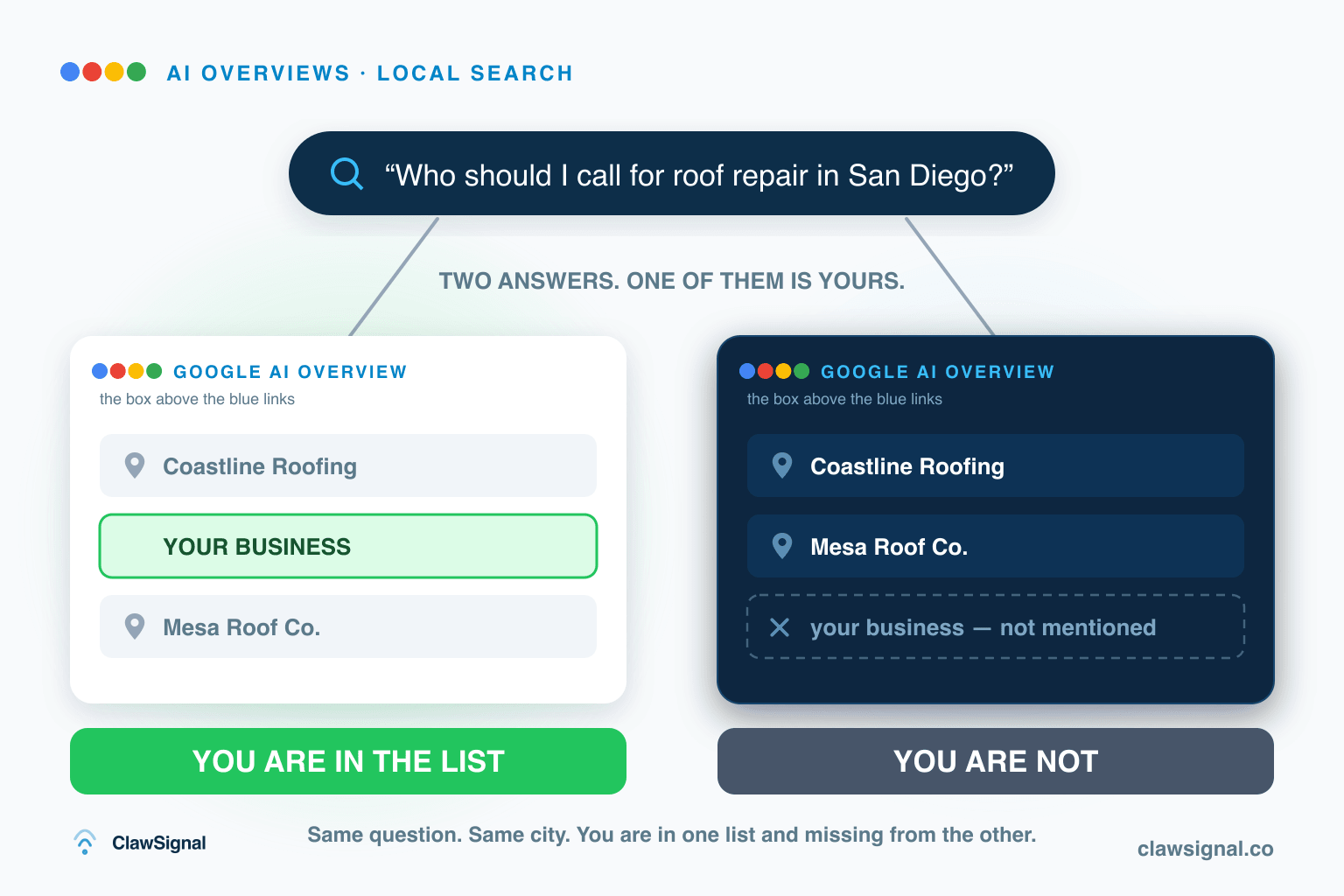
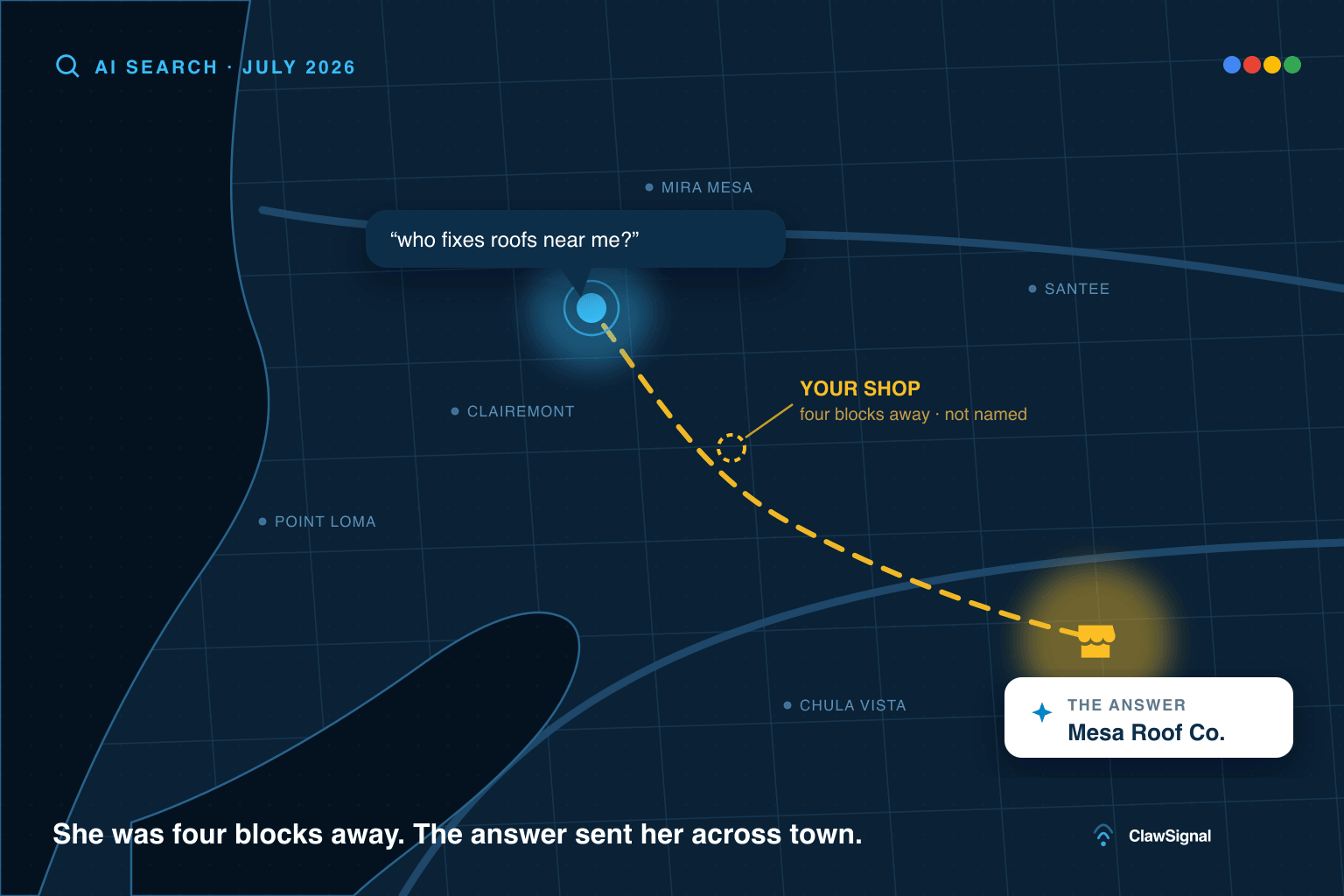
The cost of ignoring this is invisibility you cannot see in Google Analytics. An assistant that never surfaces your business leaves no referral trail, which is exactly why we track actual assistant responses instead of guessing. If you want the full local picture, our breakdown of local SEO in San Diego for 2026 pairs the fundamentals with these assistant shifts.
How Assistant Recommendations Actually Get Made
Assistants assemble local answers from structured signals: business profiles, review data, citations, and clearly-marked page content. The Yelp-OpenAI deal is one visible pipe into that assembly, per citybiz. The other pipes are the ones you already control.
Multifamily Dive laid out three ways operators can stand out in AI search, aimed at apartment operators but applicable to any local business, per Multifamily Dive. The common thread is machine-readable clarity about who you are and what you do.
On the plumbing you own outright, Google's own guidance still applies. Google Search Central's structured data documentation explains the local business schema that helps machines parse your address, hours, and category correctly.
Here is a practical implementation path a San Diego operator can run:
- Audit your actual assistant answers across ChatGPT, Claude, Gemini, and Grok for your core queries.
- Clean up Yelp and Google Business Profile data so the licensed and crawled sources agree.
- Add local business schema to your key pages so machines read them without guessing.
- Build and correct citations so your name, address, and phone match everywhere.
- Respond to reviews consistently, since that data now feeds assistant answers.
The Workflow Shift: Directory Hygiene to Visibility Ops
The July news turns a passive checklist into an active operation. Below is the process contrast we see with San Diego clients moving from old habits to an assistant-aware setup.
| Old workflow | Assistant-aware workflow |
|---|---|
| Check Google rank monthly | Track answers across four assistants plus AI Overviews |
| Reply to bad reviews only | Manage reviews as a feed into ChatGPT answers |
| One-time citation cleanup | Ongoing citation and profile consistency |
| Publish content on a quota | Improve pages once local demand is covered |
| Report referral traffic | Report actual assistant visibility, unmeasured shown honestly |
That last row matters. When we cannot verify an assistant response, we report it as unmeasured — never zero — so you are never told a fabricated result.
What Good Providers Do Differently Now
Ask a prospective provider whether they read real assistant responses or model them. Given the Yelp-OpenAI integration reported by citybiz, stale modeled estimates miss the exact sources now feeding answers.
Red flags: a provider promising a fixed "AI rank," publishing thin content on a quota with no quality gate, or reporting zero when they simply did not measure. We treat quotas as ceilings, not targets — once local demand is covered, the engine improves existing pages instead of publishing overlap.
Seasonally, San Diego demand spikes around summer tourism and the fall convention calendar, so assistant queries for restaurants, tours, and services surge then. Getting profile and review data clean before those windows is the difference between being recommended and being skipped. Restaurant owners can pair this with our notes on filling tables from Google in 2026.
Related ClawSignal Guides
Keep building on this topic with these related ClawSignal resources:
Next Step
If you want to see how these issues show up on your own site, run a free ClawSignal audit or review ClawSignal pricing.
Written by The ClawSignal Team · San Diego
ClawSignal is an AI-powered local SEO platform that writes content, tracks rankings, monitors AI visibility, and manages client deliverables around the clock. Built and operated by Bello Block LLC in San Diego.