Between late June and late July 2026, a run of trade coverage landed on the same nerve: Google now hands site owners a switch, and plenty of businesses want to know whether to flip it. The topic is the Google Search Console AI Overviews opt-out controls and what local businesses should not switch off — because the wrong toggle can hide you from the very AI results that now answer most local questions. At ClawSignal in San Diego, we field this exact question from owners weekly. This roundup pulls the reported facts together and tells you where the switch helps and where it quietly costs you customers.
The short version: opting out of AI features is not free of consequences, and the controls are coarser than most owners assume. If you want a second set of eyes before you touch anything, our team tracks real AI visibility across four assistants plus Google AI Overviews and can tell you what you'd actually be turning off.
What the Google AI Overviews opt-out controls actually changed
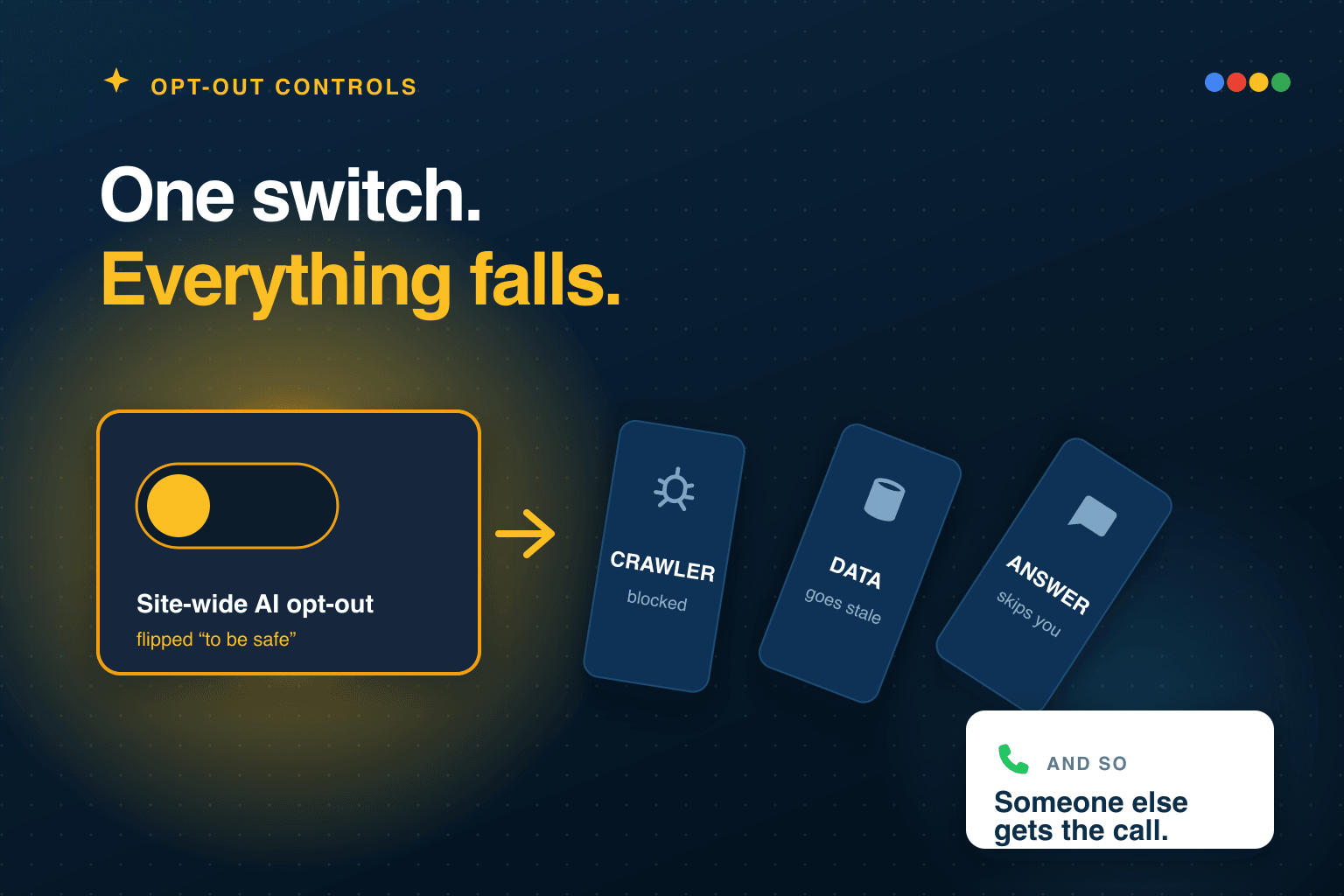
Google gave site owners a toggle to exit AI Overviews and AI Mode, according to PPC Land's July 20, 2026 report. The control lets a domain step out of appearing inside AI-generated answer surfaces. That is a different thing from stepping out of Search entirely.
The nuance most owners miss is that these surfaces are bundled. Exiting AI Overviews and AI Mode does not mean you gain back the old blue-link click volume you remember from two years ago. It means your content stops feeding the summarized answer while the summarized answer keeps running for everyone else.
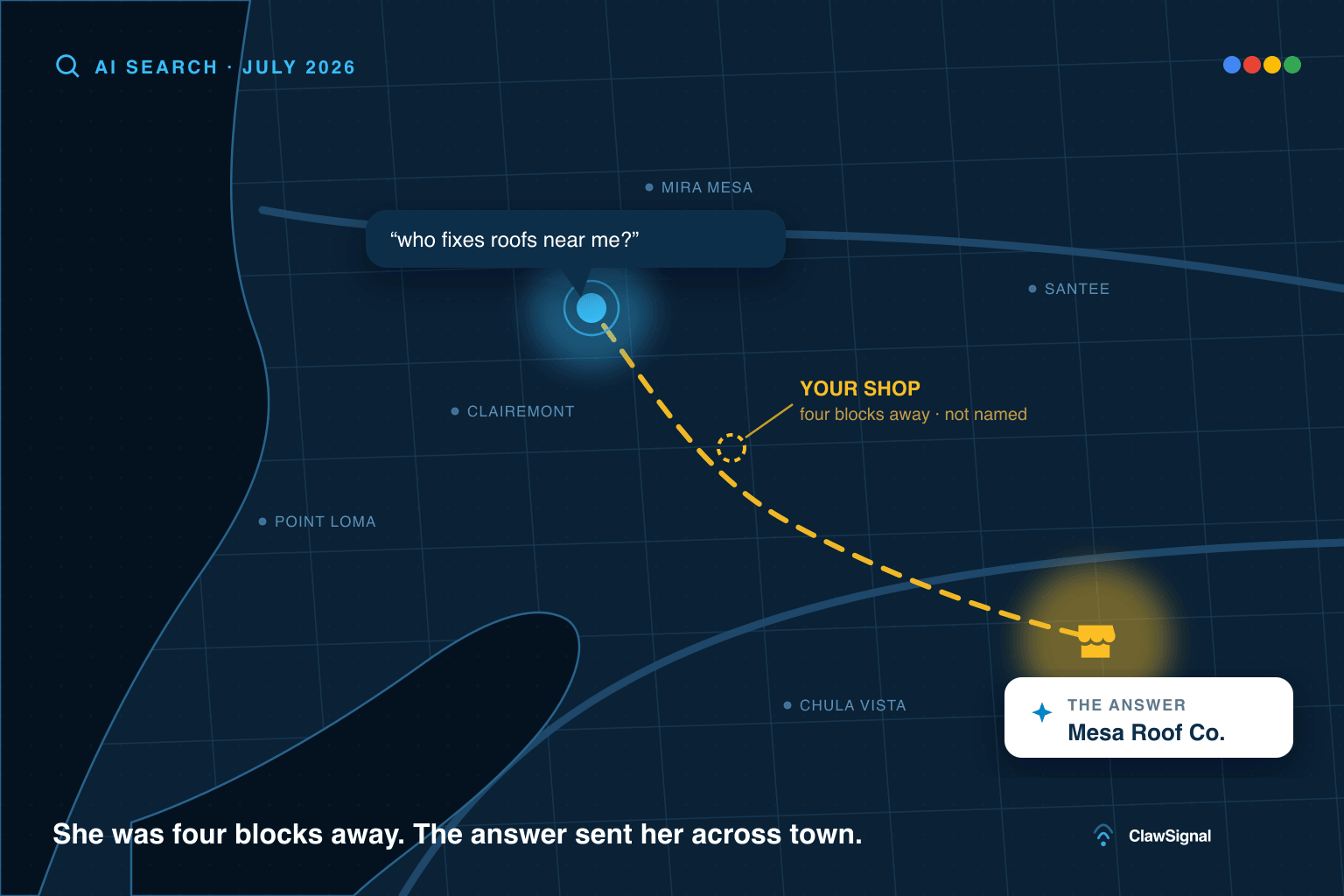
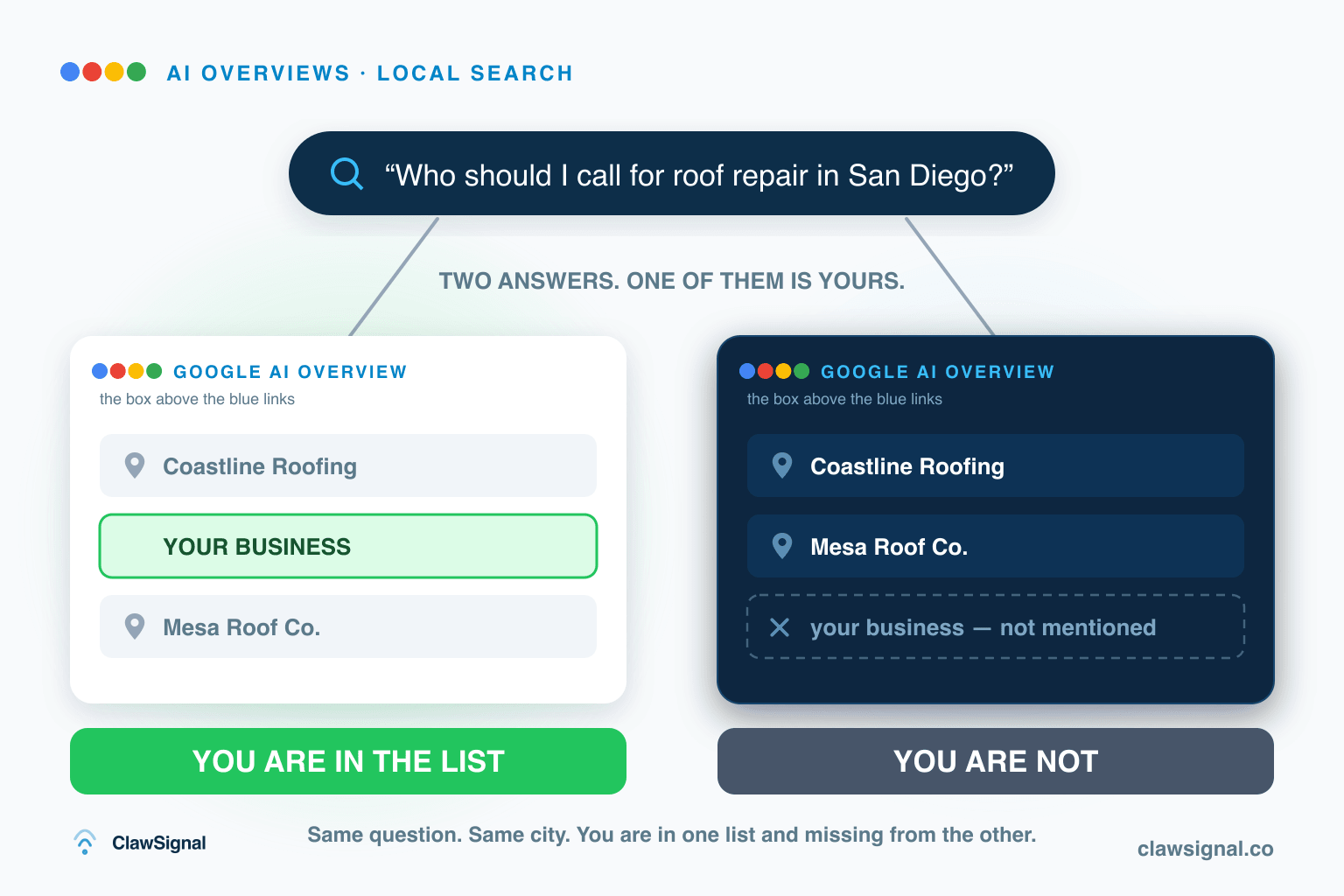
For a San Diego plumber, dentist, or restaurant, that trade rarely favors you. If a customer asks an assistant "who fixes tankless water heaters near me," you want to be in the answer, not sitting one screen below it. That is the core of what local businesses should not switch off without a plan.
Google's own documentation is the authority here — start with the Google Search Central guidance on AI features before changing any setting. We read it with clients so nobody flips a switch on a rumor.
Why the timing matters for San Diego businesses
The controls arrived in the same window as harder traffic news. Tech Times reported on July 13, 2026 that Google's AI features have reduced traffic from traditional search. When the summary already answers the question, fewer people click through.
That backdrop is why some publishers are even considering the exit. ADWEEK reported on July 8, 2026 that publishers once found opting out of Google Search unimaginable and are now preparing for it. But publishers and local service businesses are not the same animal.
A national publisher lives on ad-supported pageviews, so a summary that steals the click is a direct revenue hit. A San Diego roofer lives on booked jobs, and being named inside the AI answer often drives the call. The opt-out math that tempts a media brand can quietly sink a local one.
This is where honest measurement matters. Most agencies cannot tell you whether you appear in ChatGPT, Claude, Gemini, or Grok today — they guess. We report unmeasured as unmeasured, never as zero, so you decide based on real responses instead of a dashboard fantasy.
The setup sequence before you touch any toggle
If you are weighing whether to switch anything off, do it in order. Rushing the opt-out is how owners lose visibility they never knew they had.
- Confirm you are actually appearing in AI answers first — you cannot rationally exit a room you were never in.
- Pull your current AI visibility across the four major assistants plus Google AI Overviews, using real responses, not modeled estimates.
- Separate branded queries ("ClawSignal reviews") from discovery queries ("best SEO company that tracks AI search results near me").
- Check which pages the summary is pulling from, so you know exactly what an opt-out would remove.
- Only then decide — and if you do opt out, monitor call and form volume weekly for a real signal, not a hunch.
That sequence is the same one we run in a site audit. It is deliberately boring, because the expensive mistakes here come from moving fast.
What connects to what — and what breaks
Here is a plain map of which control affects which surface, based on the reported behavior.
| Control | What it affects | What local businesses risk losing |
|---|---|---|
| AI Overviews / AI Mode opt-out | Your content inside AI-generated answers | Being named when someone asks an assistant for a nearby provider |
| Full Search removal (robots) | All indexed appearance | Everything — map packs, blue links, the works |
| Doing nothing | Current AI + traditional presence | Nothing you control, but traffic pressure continues |
The Fast Company piece framed the bigger question well on June 30, 2026 — whether tech giants will ever let users truly opt out of AI search features. The reporting suggests the controls exist but the use stays with the platform.
For most San Diego owners, the right move is not the toggle — it is showing up better inside the answer. That is the same principle behind strong local SEO in San Diego and what to look for in a provider: earn the mention rather than hide from it.
What we tell clients to check before and after
Whatever you decide, verify it. The gap between "I flipped a setting" and "it did what I wanted" is where months disappear.
Before changing anything, baseline your AI answer presence and your Google Business Profile call volume. Screenshot the assistant responses you care about so you have a before picture that is real, not remembered. Note the exact queries that matter to your revenue.
After any change, watch the same queries for two to four weeks. If your calls drop and your competitor now owns the answer, reverse course fast. This is why we treat content quotas as ceilings, not targets — when your local demand is covered, we sharpen existing pages instead of publishing overlap that clutters your own signal.
Seasonally, San Diego service demand swings hard, so isolate the toggle's effect from normal seasonality. A summer HVAC spike can mask a visibility loss for weeks. Measure against last year's same window, not last month.
There are a few specifics worth capturing while you baseline, because vague notes are useless six weeks later when you are trying to prove cause and effect. Record the date and time of each screenshot, the exact wording of the query, and which assistant produced the answer — a response in Gemini can differ from the same question in ChatGPT or Claude, and the difference matters when you decide whether an opt-out actually changed anything. Save the source pages each answer cited too, since those are the pages an opt-out would pull from the summary; if you cannot see which of your own URLs feeds the answer, you cannot predict what disappears when you flip the switch.
Split your tracking by intent as well. Branded queries and discovery queries move for different reasons, and lumping them together hides the signal you care about. Someone searching your business name was likely going to call regardless; someone asking for a nearby provider is the customer an AI answer can win or lose for you. Watch those discovery queries most closely after any change, because that is where a coarse opt-out does its quiet damage.
Finally, tie every check back to a revenue number, not just a placement. Presence inside an AI answer is a means, not the goal — the goal is calls booked and forms filled. Keep your Google Business Profile call log and form submissions in the same view as your assistant screenshots, so a drop in one lines up against a change in the other. If a competitor takes over the answer for "tankless water heater repair near me" and your calls for that service slide in the same window, you have a real signal to act on rather than a suspicion. Reverse a bad toggle quickly; the platforms let you turn most of this back on, and there is no prize for waiting out a mistake.
Related ClawSignal Guides
Keep building on this topic with these related ClawSignal resources:
- Local SEO for Plumbers: How to Get More Calls from Google in 2026
- Local SEO for Restaurants: How to Fill Tables from Google in 2026
Next Step
If you want to see how these issues show up on your own site, run a free ClawSignal audit or review ClawSignal pricing.
Written by The ClawSignal Team · San Diego
ClawSignal is an AI-powered local SEO platform that writes content, tracks rankings, monitors AI visibility, and manages client deliverables around the clock. Built and operated by Bello Block LLC in San Diego.